
“If you have no critics, you'll likely have no success.”
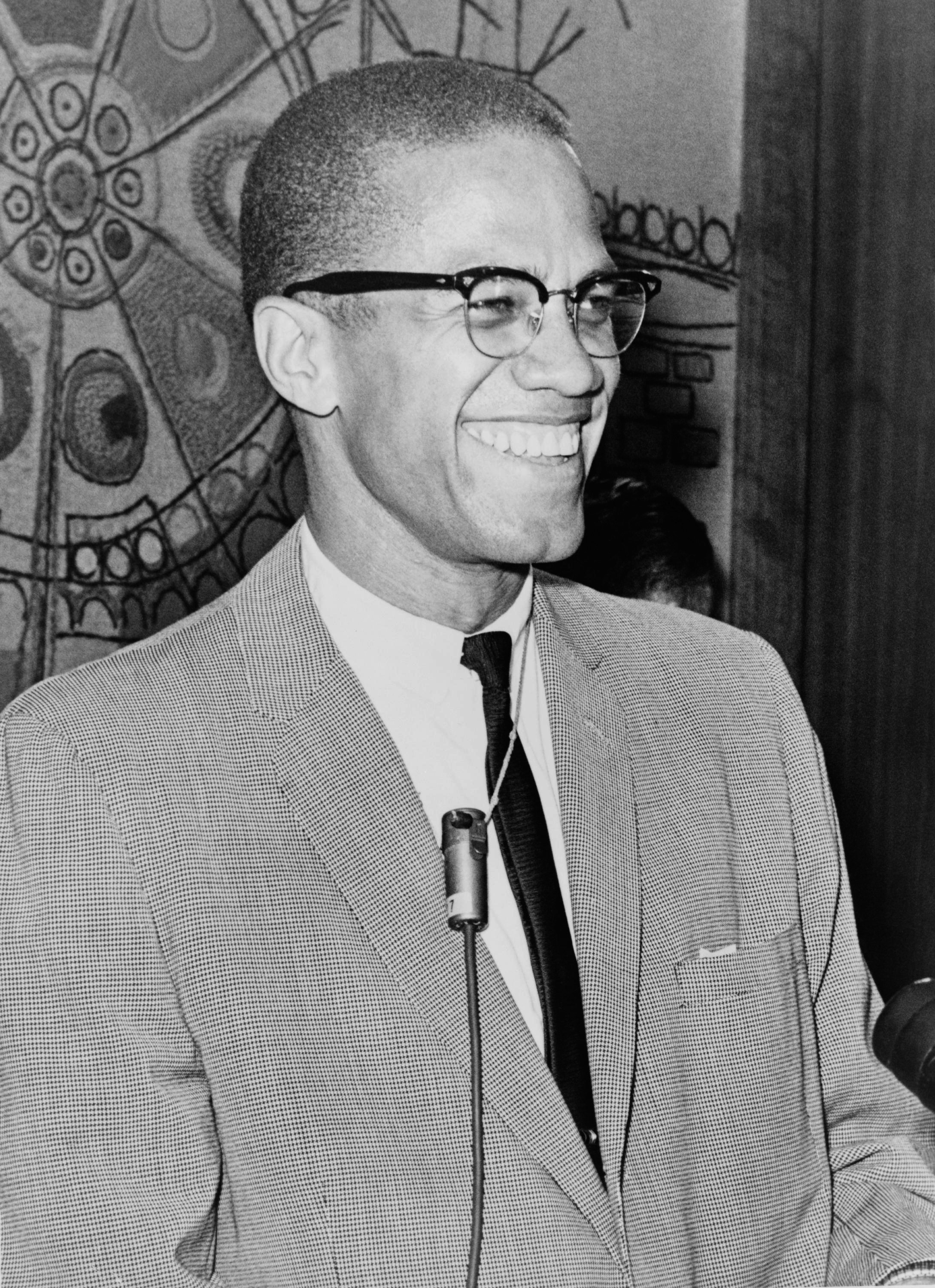
Malcolm X 1925 to 1965
Also on Apple Podcasts, Spotify and YouTube.
This line is attributed to Malcolm X (1925 to 1965), who attracted more criticism than almost any public figure of his generation and changed his own positions publicly more than once; no recording or text containing the sentence has been found.
The conversation plan
Take this into a classroom.
Claim
Being criticised is a sign you are doing something real.
Counterclaim
Plenty of criticism is simply correct, and using it as proof of success is a way of never listening to any of it.
Essential question
What should we do with criticism?
The rest of the plan
Prompts, handout, teacher guide.
4 storytelling prompts go with this conversation, along with the printable student handout and teacher guide. Those are part of the Teach Different community, together with the full library of plans and the monthly live trainings where teachers work through them.
Transcript
Read the full transcript
Steve Fouts 0:01
Hey everybody, Steve and Dan Fouts here. Welcome to the Teach Different podcast. We’re going to model a 3-step conversation method with educators from around the United States and the world, so that you can see what it’s like to have an engaging conversation with a little bit of structure. We’d like you to use this conversation method with your students. It’s very easy to use, and the more you practice the easier it gets.
Dan Fouts 0:38
Welcome everybody. Our guest today is Malcolm X, a civil rights and human rights activist. He has so many famous quotes. The quote we’re going to look at today is on the theme of success, “If you have no critics, you’ll likely have no success.” A very provocative statement. We’re going to work through this quote using our 3-step method, beginning with the claim, then counterclaims, and we’ll end with an essential question.
Let’s begin. Does anyone want to offer a comment on this quote? What do you think Malcolm X is saying? “If you have no critics, you’ll likely have no success.”
Carol: 1:47 – Claim
Hello. I’m Carol from West Bloomfield, Michigan. My background is in middle school American history and language arts. Maybe it’s your critics who help you develop your ideas, grow, and change. That’s what leads to your success, and broader appeal. What is success?
Karen 2:14
This is Karen from Alaska. I’m a secondary history and English teacher, and I’m currently working in a coaching curriculum position. I don’t know the context of this quote, but if nobody’s criticizing you, then you’re likely not challenging the status quo. You’re not pushing any boundaries or doing anything new.
Dan Fouts 2:53
Therefore, you’re not ever going to achieve success?
Karen 2:56
Well, if success is change, changing the status quo, then no.
Steve Fouts 03:09
I think you’re moving into what he means by success, the word success. That’s where you think of his life, and having success as a human rights activist. You’re always overcoming obstacles and trying to improve the world in some way. If you’re fighting for justice, and you’re trying to make the world better, you have to have critics, almost by nature. So, I see where you’re coming from, Karen, in reading that into this quote.
Dan Fouts 3:51
Welcome Angela and Sharon to the discussion. Whenever you want to jump in, please do. That would be wonderful. When I first looked at this quote, I immediately thought of my students, some of whom are really good at taking constructive criticism. Others are not good at it. They treat criticism as something akin to an emotional assault to their character. So, I was thinking about how students might think of criticism and whether or not that’s important for them as they try to reach success, however they define it. Did anybody else have that interpretation of the quote?
Karen 4:51
That did occur to me. I thought of the many times I’ve worked with students on written drafts and how hostile they would become when you gave them feedback on ways to improve their message.
Dan Fouts 5:10
Hi, Sharon. Would you like to chime in?
Sharon 5:12
Malcolm X meant something different here when he was talking about, if you have no critics, you’ll likely have no success. Being at the cutting edge of change is problematic. It’s very difficult, especially if you’re taking a big step. If you get out too far in front of people, then you’re going to get criticism, because people can’t learn as quickly as some people want them to change. We do better with small steps. I really respect Malcolm X. I want to just sit in on this discussion, to see what I can learn from you all.
Steve Fouts 5:57
You mentioned change, and likened that to success, which sounds like what Karen was saying about the status quo. When you want things to change, you’re going to have critics. You can’t get around it.
Dan Fouts 6:22
An interesting thing you could do with students is ask them if they have ever tried to move forward with something and immediately got critics going against them. How did they react? I wonder what examples students might bring up. Could they think of a time when they went out in front and were criticized?
Sharon 6:54
I’d be interested in knowing how they felt. Were they proud of themselves for having taken the risk, for being out in front? Do they see taking a risk as a form of success? Rather than the failure of criticism, it’s a success for taking a risk, and getting other people engaged with you.
Steve Fouts 7:23
Here’s a question I have for the group, and I’d like to entertain the counterclaim a little bit. When I originally read this quote, I thought of students and how their personality may come off, or how they hold themselves, to other people. They get criticized for their behavior and for their actions. I think some of them develop a defensive posture after a while. They get so used to the critics and the criticism, that they become defensive with everything that they do. I don’t know if you know the type of person I’m referring to here. I’m wondering if there’s a frustration that is showing through with Malcolm X. It doesn’t matter what you do, someone is always going to try to bring you down, and you just need to block them out, and go after what you believe is right. But, that can potentially shut you off to criticism. That may be constructive. It might make you think there are so many enemies out there, that no one really cares about your cause, or what you want to accomplish. But, you’re so defensive that you shoot yourself in the foot at times. I’m kind of pushing toward a counterclaim to this quote by acknowledging that critics are important to success, because you need to overcome things in order to achieve. Support and encouragement from people is also helpful to getting where you need to go. You’re going to need other people with you to become something great. I’m just pushing this out there to see if I can get anybody to respond to it.
Karen 10:00
When you first sent out this quote, I thought you should have sent the counterclaim out with it, because I immediately thought of our previous presidential regime and being surrounded by yes men. Not having critics means there aren’t multiple perspectives, there are no opportunities to refine your message, there’s no chance to be proactive and deal with issues before they occur. Critics are important in education, at least in our district. The term we use is feedback. It’s positive or negative, but it’s feedback. It’s supposed to be timely and specific. We’d never look at a student’s work and say, that’s good, or you’re so smart. We’d say, this part is good. How can you improve this other part? It’s considered feedback to refine your message or your skill. I also thought of the many leaders who have said they want people in their cabinet who will disagree with them. It helps them refine their stance when they’re engaged in debate with the opposition.
Dan Fouts 11:41
That’s really good, Karen. We also use feedback in my district. We’re taught that it’s feedback, not criticism. Think of it as getting information from someone else about how you can improve. It is a mindset that people have to have when they receive feedback from other people so that they take it in the right way.
Karen 12:15
Your basketball coach shouldn’t let you keep making the same kind of mistakes that aren’t refining your skills. You’d expect your coach to give you pointers on how to improve, to teach you ways to conserve energy or get stronger. You wouldn’t expect them to let you continue making the same mistakes.
Sue 12:47
I really appreciate what Karen said. I work in the same district as Karen. One of the thoughts I had was there’s a place from which feedback, constructive negative feedback, comes from. There’s a slightly different connotation with critic and criticism that can come up. If it’s from a place of destroying or ending a project, which is sometimes the case, then that isn’t going to be helpful, it could lead to what Steve was talking about, defensiveness. I think that can happen pretty quickly and we can get discouraged. One of the things I really like to do as a teacher is to bring movement into the classroom. I even take kids to the gym for a five minute mental break. We ended up doing a lot of games in the gym to learn math facts, or other things. I think some of my colleagues think that’s crazy. I can feel it. It’s been interesting, because I think that after three years they trust that I’m not just in there having the kids play without learning. That’s where I’ve faced the critics in my school.
Dan Fouts 14:19
Would you just quickly say what you teach and where you’re from?
Sue 14:23
Oh, yes. I teach in a very small school, about 45 kids in the middle of the sub- Arctic in a town called Golden. It’s a really cool school because we have K-12. Nobody disputes the fact that a third or fourth grader needs to go down to the gym. It’s when I take the 10th or 11th grade students.
Steve Fouts 14:43
Do you have some critics of that approach?
Sue 14:50
Initially, yes. I don’t think I do now. It wasn’t outward criticism, it was more incredulousness. I think they couldn’t believe there’d be a value at 9:05 in the morning of having juniors in high school in the gym. In the case of those kids, we might be shooting hoops and there wasn’t any educational value that you could directly observe. Critics couldn’t see how this was going to benefit their learning, but I surely could. By doing that activity, I could get back to the classroom, and in three minutes, they were understanding a formula that we’ve been working on for a week, with a deeper understanding of area versus circumference of a circle. They got it quickly.
Dan Fouts 15:34
I love it. I would have been a supporter of that idea. I like that.
Sue 15:40
It’s not something you can usually do at a large school. If you have 150 kids, you can’t wander down to a gym. This is pretty specific to my situation.
Sharon 15:54
Why does it work with older kids, but not younger?
Sue 16:01
Oh, it absolutely works with younger kids. My husband takes his second and third grade kids out. They frequently get out in the snow. I don’t think people find that odd, but somehow with older kids it is. I didn’t describe that very clearly. Thanks for asking.
Sharon 16:25
Congratulations for starting it and sticking with it. As somebody who identifies with movement, I can see intuitively how that would be a huge gift to your students.
Steve Fouts 16:40
Sue, how do you prove to other educators, to the critics, that it is a success? That’s where you get to define what you’re trying to accomplish. Since that’s not clear, and that’s not a shared definition of what success is, you get critics. They don’t see where you’re going with it, and that’s another challenge.
Sue 17:22
Well put. That is the challenge. I know in Finland it’s part of the national curriculum. They demand activity as part of their curriculum. It would be interesting to study Finland and see how they’ve addressed critics. I certainly haven’t done a formal study.
Steve Fouts 17:43
It’s one of those things that’s intuitive as a teacher. You know when someone has been affected in a positive way by going down to the gym. You see it, but it’s hard to describe that for people and provide the data.
Sue 17:59
It’s hard to show that the students are now able to work on our proof of the day, and to work more quickly, because we went to the gym. The kids up here are pretty slow in the morning. They’re not moving quickly. Many of them stay up most of the night. That little bit of exercise wakes up their brains, and makes an amazing difference in what we can accomplish as a group once we return to the classroom.
Steve Fouts: 18:34 – Counterclaim
You made me think of something here. What if we change this quote to, if you have no support, you’ll likely have no success. How would you weigh the importance of criticism and the importance of support when it comes to having success? How would you describe the different portions you need of both? Maybe that’s where the word constructive criticism comes from. I’m wondering how you weigh those two. Very few people are going to be successful without support.
Carol 19:31
It’s an interesting conundrum, because critic, criticism, and support seem very disparate, yet, the way you’re using it makes perfect sense.
Sharon 19:52
Isn’t good criticism, well phrased and articulate, a form of support?
Karen 20:05
This is Karen. I conduct trainings for teachers, especially for new teachers. I often have mixed groups of teachers. Some have been in the district for ten years, and others are brand new teachers. In my very first mixed group workshop, I made a couple of jokes. The feedback I received at the end of my session included this comment, remember some of us don’t know you that well, so we don’t know how to take your humor. This made me start thinking of my trainings and not how I see these people, but how they are seeing me. In that case, the criticism was support, because it helped my outlook mature in a way that it needed to.
Sue 21:11
Karen, that’s a really good point. Maybe a criticism that comes with an intent to be helpful is supportive. I think that you can sense when somebody has no intent to help, but if there’s a helpful component, then critique, criticism, support, are all very important for growth.
Dan Fouts 21:35
I think it would be really interesting somewhere in the conversation to point blank ask the students, do you respond to criticism or encouragement when you want to improve? Some students think that if you’re not criticizing them, then you don’t care. They want you to criticize them, because they want to do better, they want to be perfect. Then there are others, where the second you criticize them, they wilt and shut themselves off. So, I think asking your students will help you learn so much about how they want to be approached in the classroom, and how they want their feedback dispensed.
Steve Fouts 22:35
Well said. You made me think of students in underserved environments that I’ve been with over the years. If you’re not criticizing them, or pointing out something in a harsh way, sometimes they don’t listen. It’s unfortunate because that’s probably what they have modeled in their home environment, which may not be very supportive. But, they equate criticism and being tough and harsh with care. They will react to that. If you give them support, and try to coddle them, they don’t think you’re serious. They think you’re just playing a game, and you don’t really care. It really has to do with knowing your audience.
Karen 23:47
I think there’s also the sense that if your criticism isn’t direct or pushing them the way they see other classmates being pushed to do better, then they feel like you don’t think they’re worth it. They can’t reach those heights, so why bother with them. I’ll just give them some soft feedback and move on and work with the more deserving students. That’s a great point.
Sue 24:27
It comes back to that specific feedback, as opposed to just saying good job. It takes a lot of work to provide specific feedback. You have to really be on your game. But, there’s no doubt it’s going to help the kids feel like you believe in them and their ability to move forward with the curriculum.
Dan Fouts 24:57
I’ve found that after an activity, project, or conversation in class, sending one targeted feedback email to a student, either commenting on something really good that they did or something they could have worked on has a profoundly positive effect. I think the kids think, to your point, Karen, that you’re directing it to them. They feel special even though you might be the bearer of a little bit of bad news. They at least think that you cared enough to connect.
Sue 25:35
I was chuckling about what Dan said, being the bearer of bad news. That works as long as they know that you care enough to make a comment directly to them.
Sharon 25:54
So, one of the things I’m enjoying about this conversation is that all of you have such high skill levels. You acknowledge each other, and compliment the person who has just spoken before adding whatever you want to add. That’s a form of support that continues to enrich and broaden. I’m sure that it’s a skill you have because you use it a lot in the classroom. I’m a lifelong learner living in France. At the age of 65, I became a student of French. I’m highly critical of myself, and the French are highly critical of people who don’t speak French correctly. When people are criticizing, I curl up and go blank. So, it matters how that criticism is phrased, how it comes across, and how judgmental it is. Students are growing up thinking it’s important to be perfect, rather than valuing learning. I got to learn that at 65.
Steve Fouts 27:29
Yeah, we appreciate that, Sharon. As far as conversations go, being teachers we are used to giving people credit for ideas. You can call these social emotional learning skills. What we’re trying to do is to get the students to have conversations like this. It doesn’t have to be about a quote on criticism, but just that give and take that happens when they’re listening to others, and they’re referring to something that someone else said, and they’re agreeing, or politely correcting. If the students can develop those skills, they’re lifelong. It doesn’t matter what they end up doing in life; they’re going to be successful. So yeah, that is much appreciated.
Sharon 28:29
Absolutely. Thank you, Steve. That’s another thing you do, you all address each other by names. Adults should have your skill levels and have these kinds of conversations.
Dan Fouts 28:44
We want to translate it to the classroom. If we get kids early, then they’ll have these skills, and use them as a matter of habit. That’s the value of these conversations, especially in toxic environments.
Steve Fouts 29:09
What is the essential question?
Dan Fouts: 29:11 – Essential Question
I was just going to do that. We just came up with this. Do you have to have critics to succeed? As the conversation in your classroom winds down, it’s sometimes useful to put out an essential question for the kids to think about, write about, or do something with, so that they internalize the ideas that were shared during the experience. Do you have to have critics to succeed?
Steve Fouts 29:43
Well, thanks so much for joining us for what we hope was an enlightening conversation. I hope you noticed that it followed our 3-step method that we’re always talking about at Teach Different. You introduce the quote, you come up with the claim that the author is making, then you come up with some counterclaims, and end with an essential question. That’s what holds the conversation together. If you think this method is something that other teachers at your school would benefit from, or you have a school administrator who really appreciates social emotional learning done in this way, then please reach out to us at support@teachdifferent.com. We’ll set up the Zoom training at your school. Thank you so much for coming. We look forward to having some really great conversations.