
“In the end, we will not remember the words of our enemies, but the silence of our friends.”
Martin Luther King Jr. 1929 to 1968
Also on Apple Podcasts, Spotify and YouTube.
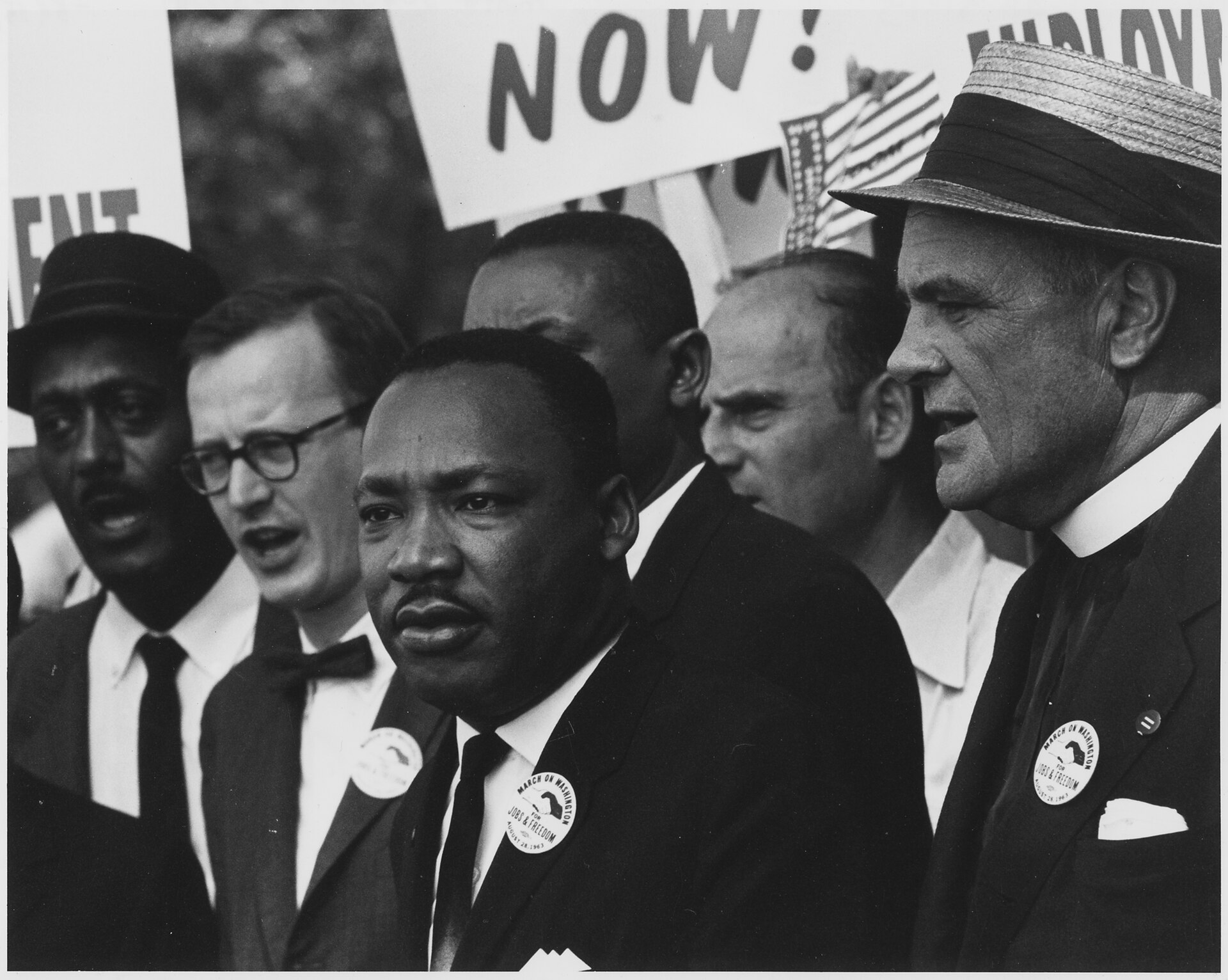
This is a paraphrase of a line Martin Luther King Jr. (1929 to 1968) definitely did write, in the Letter from Birmingham Jail in 1963, where he says we will have to repent not merely for the hateful words of the bad people but for the appalling silence of the good people.
The conversation plan
Take this into a classroom.
Claim
Silence from a friend does more damage than opposition from anyone else.
Counterclaim
People stay quiet for all sorts of reasons, including fear and not knowing what to say, and reading every silence as betrayal is unfair.
Essential question
What does loyalty ask of us when it costs something?
The rest of the plan
Prompts, handout, teacher guide.
4 storytelling prompts go with this conversation, along with the printable student handout and teacher guide. Those are part of the Teach Different community, together with the full library of plans and the monthly live trainings where teachers work through them.
Transcript
Read the full transcript
Steve Fouts 0:00
Hey everybody, Steve and Dan Fouts here. We are teaching different with Dr. Martin Luther King, Jr. with a quote about loyalty. “In the end, we will not remember the words of our enemies, but the silence of our friends.”
Loyalty is a wonderful word that young people can identify with. They have friends, and they’ve been in situations where they’ve needed their friends to have their back. When they’re picking and choosing different peer groups to be a part of, they’re more familiar with certain people, and in a way that means they deserve fidelity. The more you’re with the same people, the more there’s a shared expectation of how you’re supposed to act in certain situations. From this, students are getting a good idea of loyalty. What would you say the claim of this quote is?
Dan Fouts: 1:11 – Claim
I think Dr. Martin Luther King is definitely coming down on the idea that loyalty from friends is a very powerful force. When it’s broken, if your friends don’t have your back, so to speak, it’s much worse than anything your enemies might say to you. When your enemies say things that hurt you, or are hostile to you, that’s bad enough, but when friends turn their back on you, it’s even worse.
Steve Fouts 1:47
Turning their backs, in this case, is silence. Putting this into context, Dr. King is in the middle of a civil rights movement where he wants everyone to stand up for what’s wrong, to fight for what’s right. If his friends don’t stand up for that, then that’s what stays in his mind. It’s like an expectation that is broken. You expect your enemies to have bad things to say to you, so you just brush them off. But, when your friends don’t step up, that’s when it gets really bad.
Dan Fouts 2:33
Ask the kids to share a time when somebody they trusted didn’t speak up for them in a time of need. It might be on a sports team, in class, or in any situation when they felt like someone turned their back on them or didn’t say anything. There’ll be some sensitive stories, but some really important ones.
Steve Fouts: 3:05 – Counterclaim
You could also ask them to share if they themselves have ever not stepped up when they probably should have said something. Bullying would be one of those topics that would come up in a discussion like this, because many students are going to have experiences with bullying. That’s when this all comes out. Are you going to say something when someone you know is being mistreated, even though it might put you at risk? Those are good ways to get the conversation started.
Now, if we go to the counterclaim, how would you put that into words? Maybe something like the hostility of your enemies is actually worse than feelings of betrayal from your friends.
Dan Fouts 4:04
When people are hostile or angry towards you, that may hurt more than your friends betraying you. The idea is that you shouldn’t really count on people to stand up for you, that you have to stand up for yourself. In the end, it’s our enemies that we need to focus on, because we can’t really trust people to stand up for us all the time. That’s how I would read it.
Steve Fouts 4:38
I like that. There’s this idea that if you believe in something so much, which Dr. King did for the civil rights movement, that what is going to hurt you in the end are the enemies and people who are actively trying to put you, your movement, and what’s right down. You don’t think of your friends, per se, it’s more of the ideal that you’re seeking. If you believe all people should share your belief, and you still have people who are actively trying to go against you, that would likely weigh on you your whole life. You believed in humanity, but humanity not only didn’t agree with you or was silent, but actively tried to put you down. That would really hurt.
Dan Fouts 5:40
Right, those memories are painful, and they stick. Again, what’s interesting about this quote is that both your enemies and the betrayal of your friends through silence are really negative things. So, you’re comparing two things that are bad, and you’re getting the kids to evaluate which is worse. By getting them to evaluate which one is worse, you’re helping them articulate what they value. Do they value loyalty versus these other things? This is a very introspective conversation.
Steve Fouts 6:20
It is. Here’s a good essential question to wrap it up. I think it will get the students to think deeply and make the connection between doing the right thing and the obstacles in their way. Do you need loyalty to fight injustice? A question like this asks someone what it means to fight for injustice? Is it an ideal, a personal thing, that you should be asserting on a personal level? Are you trying to convince people to come to your side knowing you’re going to have enemies? You’re going to have friends who may not want to step up. The question you ask yourself is, do you need others to agree with you to fight for something you believe is a really good thing? In a way, a practical question.
Dan Fouts 7:18
Another angle is the loyalty of people. Do you need loyalty to fight injustice? Do you need followers who agree with you? You could also spin it as, do you need loyalty to an ideal in order to fight injustice? Do you always need to stick to your principles to fight injustice or can you compromise? This is a different angle to the essential question that may open up some interesting conversations. When you say loyalty, do you mean loyalty to ideas or people?
Steve Fouts 8:02
I like that. With the civil rights movement, they had to compromise in order to get anything done. I think that’s a really good way to put it, actually.
Dan Fouts 8:15
Maybe the ultimate conclusion that the kids will come to is that you need loyalty to your ideals, and from other people, but you also need to bend, compromise, and be pragmatic. This is good. This would be a great one.
Steve Fouts 8:33
It should be a good essential question. We hope you’re walking away feeling energized by some great ideas and are confident conversations like this are possible with a little bit of planning and a 3-step method. Make sure you visit our Conversation Library full of conversation starters, each with a different quote, a sample claim, counterclaim and essential question to get you started.
Good luck and don’t forget to Teach Different with conversations and make a difference every day.