
“Never ever be afraid to make some noise and get in good trouble, necessary trouble.”
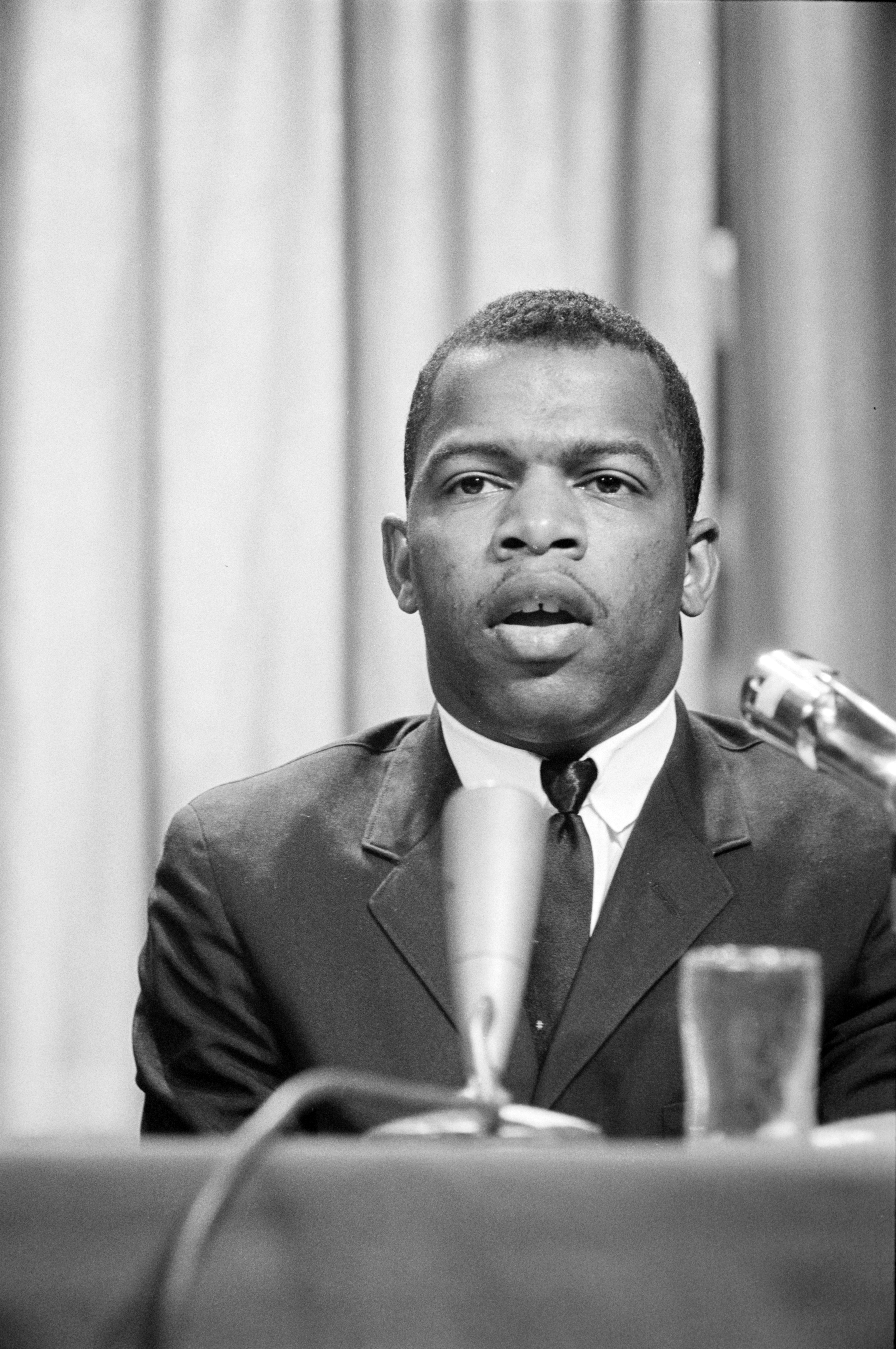
John Lewis 1940 to 2020
Also on Apple Podcasts, Spotify and YouTube.
John Lewis (1940 to 2020) was beaten at the Edmund Pettus Bridge in 1965 and arrested more than forty times before serving thirty-three years in Congress, and he said this so often that it became the thing people quoted back to him.
The conversation plan
Take this into a classroom.
Claim
Standing up for what is right matters even when it causes trouble.
Counterclaim
Rules hold things together, and someone convinced they are causing necessary trouble is very hard to argue with.
Essential question
When is it right to break a rule?
The rest of the plan
Prompts, handout, teacher guide.
4 storytelling prompts go with this conversation, along with the printable student handout and teacher guide. Those are part of the Teach Different community, together with the full library of plans and the monthly live trainings where teachers work through them.
Transcript
Read the full transcript
Dan 00:00
Welcome to the Teach Different podcast. Steve and Dan Fouts here to mull over a quote by John Lewis, famous civil rights activist, represented a district in Georgia for 33 years, part of the Freedom just a very prominent figure within American history really in the 20th century. Here’s his quote.Never ever be afraid to make some noise and get in good trouble, necessary trouble. Never ever be afraid to make some noise and get in good trouble, necessary trouble. We’re gonna work the Teach Different Method on this quote and see what we can come up with. So Steve, what’s your interpretation of this? How would you put this in your own words?
Steve 01:07
If you’re in a bad system or you’re in a place that isn’t just and treating people well, and you’re silent, you’re complicit, you’re buying into the bad system, you’re making things worse. But if you make noise and you work to change something that should be changed, that’s going to, number one, take courage and then you’re going to get in trouble. You’re going to… People are not going to like what you’re doing and you’re going to put yourself at risk because the system is not the way you want it. You’re trying to change something. So that’s what this says to me.
Dan 02:00
Yeah, never be afraid. So definitely the whole courage is in there. Never be afraid to make some noise, noise and get in good trouble. So yeah, the word trouble suggests that what you’re doing is going against at the bare minimum, a status quo and then could be a law that is imposed on society. And then the end, necessary trouble, which makes you think that he’s saying that certain kinds of trouble you should get in. Okay, so this really flies in the face of what most people would think, which is follow the rules, obey authority. This is saying don’t obey authority.
Steve 02:31
It’s a, that’s actually the counterclaim. You should always be afraid. If you’re getting in trouble, it’s not a good sign. You should be checking yourself and protecting yourself. That’s the counterclaim.
Dan 03:01
Yeah, right, right. And this is saying you should get into trouble. should, the trouble is necessary if you feel wronged, if you feel wronged, certain kinds of trouble is necessary for advancement. Yeah, right.
Steve 03:10
You shouldn’t be afraid of that. There’s other types of trouble that are not good, you know, for anyone. And I think he would probably acknowledge that. I think he’s alluding to obviously the struggles of the civil rights movement and, you know, from a marginalized population perspective. That’s what he’s talking about here, but I’m reading into it. He’s not saying all types of trouble are good. And he’s just saying there’re certain types that you shouldn’t be afraid of because they’re necessary. They’re almost inevitable. They’re good. It’s good that you’re in trouble. You’re making an impact. Because systems will not change unless people break them and movements, you know, reframe them.
Dan 03:57
They’re good. It’s good.
Steve 04:18
So this is a, I mean, I don’t know if you could call it revolutionary. is somewhat revolutionary. I’ve got an immediate application to this from the events, current events, you know, with this, violence that we just saw last week and how, you know, the person that lost their life was speaking out and was very open and challenging of other people’s opinions.
Dan 04:19
So, yeah.
Steve 04:48
And not everyone agreed. Yeah, Charlie Kirk. Not everybody agreed, obviously, with Charlie Kirk and he rubbed people wrong. But, you know, he was expressing a voice. He was expressing a freedom. He was creating a bit of trouble in other people’s minds that weren’t ready to hear what he had to say. He didn’t create, you know, physical trouble. He didn’t threaten people.
Dan 04:48
You’re referring to Kirk? You’re referring to Kirk?
Steve 05:15
But sometimes the words really get at people and if people perceive it as trouble, maybe it is. But the point being,
Dan 05:24
That’s good. Are you saying that that’s good trouble? According to this claim, you know, trying to Yeah, trying to, yeah, is trying to engage people in debate. That seems to me to be the kind of trouble that is safe in a democracy usually.
Steve 05:30
I would love to have listeners weigh in. You know, is it? It’s a good, yeah.
Dan 05:48
That if, yeah, you can say things, you can have the courage, never be afraid to speak your mind. You might get yourself in trouble by what you say because other people will look at you and go, I disagree with you. But that’s probably, I don’t know. Yeah, that’s, no.
Steve 06:05
It’s not physical harm. It’s mental stimulation, mental challenge. Now, I’m gonna give a counterclaim to that though. And that’s this. There’s a way of talking where you really can demean people and be a bully and say things, whatever you wanna call it, all the racists.
Dan 06:13
Yes.
Steve 06:31
Like whatever words people use that are negative in connotation of the way people talk, can, although it doesn’t create physical harm, it can create, you know, obviously a reaction.
Dan 06:46
Emotional harm can create a reaction or emotional harm.
Steve 06:52
Yeah, that’s real. That’s real. They say sticks and stones may break my bones, but words will never hurt me. I think that has a counterclaim. know, sometimes words are the worst and that we can get over our physical challenges. It’s just when people like make us, belittle us, make us feel less than, and just when you just feel targeted.
Dan 07:07
Yeah.
Steve 07:22
That is a really, really scary feeling. It also creates a lot of animosity and anger. But again, back to the quote, the question, maybe the essential question is what type of trouble is worth it? Or what’s the criteria for what is worth speaking out for?
Dan 07:32
Yeah, right, right. Yeah.
Steve 07:49
And maybe like risking your life for it or all just as a free speech in general or is it something that you need?
Dan 07:54
Yeah. What is good trouble? What is necessary trouble? There’s your essential question, because that’s going to change depending on the person. To a civil rights activist, good trouble is going to mean one thing. But to a conservative activist, let’s say a pro-life group, good trouble is going to look something different. So what are the, and then another question, what are the boundaries of action that should constrain us in acting on anything, whether we call it good trouble or not? I mean, we have to be under boundaries of action. I’m thinking of the Supreme Court, you know, I teach government, this is exactly what the Supreme Court has to deal with, with very controversial groups. I’m going to use John Lewis’s language, getting in good trouble, know, doing things that they believe are worthwhile and important for their cause. And then they have to set boundaries for that. And that’s difficult to do.
Steve 09:04
The boundaries are, because you’re within a system. And the other layer to this is perceiving that someone is creating trouble is reality enough, regardless of the motivations or intentions of the person saying it. So that adds a layer. We’re not totally in control of how people react to us, which makes it even more dangerous, you know, to speak out, because you know maybe even half the people are gonna take you a certain way. And that’s what becomes your demise if someone gets mad enough at you or enough people get mad at you and then they try to stop what you’re doing.
Dan 09:37
Exactly. Sure, sure. And this is one of the, I want to say, costs of living in a democracy that promotes freedom of speech and expression. It not only supports expression that lands and creates peace, but it also protects, our constitution also protects speech that riles certain people up. Freedom has to be a broad swath of activities. Otherwise, our system doesn’t function the way it should function. I mean, this is, you know, to your point, I’m going to the, we spend a little time on the, the counterclaim. The counterclaim is don’t speak up as much. Be afraid that what you say is going to cause trouble and choose restraint and silence over trouble.
Steve 10:51
Trust, you could even argue. Trust. Don’t make trouble. You don’t go along.
Dan 10:59
Trust the people making decisions or trust the leaders.
Steve 11:01
Yeah. Yeah. Like if your teacher is telling you to sit down and you want to create trouble because you don’t want to sit down, you could just say, look, they’re wanting me to learn and everybody else to learn. That’s why they’re doing this. I’m not going to think about it personally. I’m just going to do what they’re going to say. You know, good decision. But if you don’t trust authority, and I’m sorry, that’s what’s breaking down.
Dan 11:24
Yeah, trust the person in authority. Trust the person in authority.
Steve 11:32
in society. That’s the challenge. If you’re not trusting authority, then you’re left to your own
Trouble. Because you’re gonna be thinking the worst of people and no one’s there to have your back. And if you don’t trust the system. So this is what’s difficult right now for us. We’re all thinking that we’re threatened and everyone’s angry, left, right. But the trouble that each is causing for the other is perceived in certain ways and it’s very tough to get at what this is, but you have to understand it.
Dan 12:18
Never ever be afraid to make some noise and get in good trouble, necessary trouble. A word came out of this now that I’ve read it again, related to the claim. And that is another way to say the claim maybe, is conflict is good?
Steve 12:37
Sometimes.
Dan 12:39
Right. Conflict can be good is the claim here. so a question, you know, because conflict comes when you are making good trouble and challenging authority and doing things that you believe are just that are going against unjust laws or whatever. And it really begs the question, how can we as a society use conflict?
Steve 12:51
Mm-hmm.
Dan 13:08
for reconciliation and peace. How can we have conflict and also have peace and reconciliation and understanding at the same time?
Steve 13:18
That’s where I think the conflict has to be a conversation.
Dan 13:23
Well, you’re right.
Steve 13:23
You need to set up ways where you talk and you’re able to listen to other people, but it can’t be disingenuous. It’s got to be authentic where you need to go there in the right spirit. You can talk and debate for three hours and not be any better afterwards. You just won or thought you won. A conversation is not a debate though. You know, this is where you spill your guts and people give their own logic and you listen to it. And it’s someone you don’t agree with, but at least you understand them better. Like why they think the things they think.
Dan 13:59
Right. It’s the method. It’s the claim and the counterclaim. It’s storytelling. It’s kind of what we’re trying to do at Teach Different is to hold the lid on disagreements and conflict. I mean, I know we’re spinning off this quote to talk about Teach Different, but there’s connections here. There really are connections.
Steve 14:08
Yeah. There you go. There are. It’s a good quote. It’s a good quote. It’s got me motivated for the week.
Dan 14:26
Yeah, John Lewis, never ever be afraid to make some noise and get in good trouble, necessary trouble. Take care of everybody out there. The news has been difficult recently and we just need to stay positive and know that we have so much more in common than we have different from each other. And we just have to keep talking to each other in ways that uplift our spirit and hearts. We can do it.
Steve 14:58
Call it a fake war. There is no war. There is always peace that can be chosen and understanding period. We are not, we are in control.
Dan 15:11
Yep. All right. Take care, everybody.
Steve 15:13
Alright.