
“The best fighter is never angry.”
Lao Tzu
Also on Apple Podcasts, Spotify and YouTube.
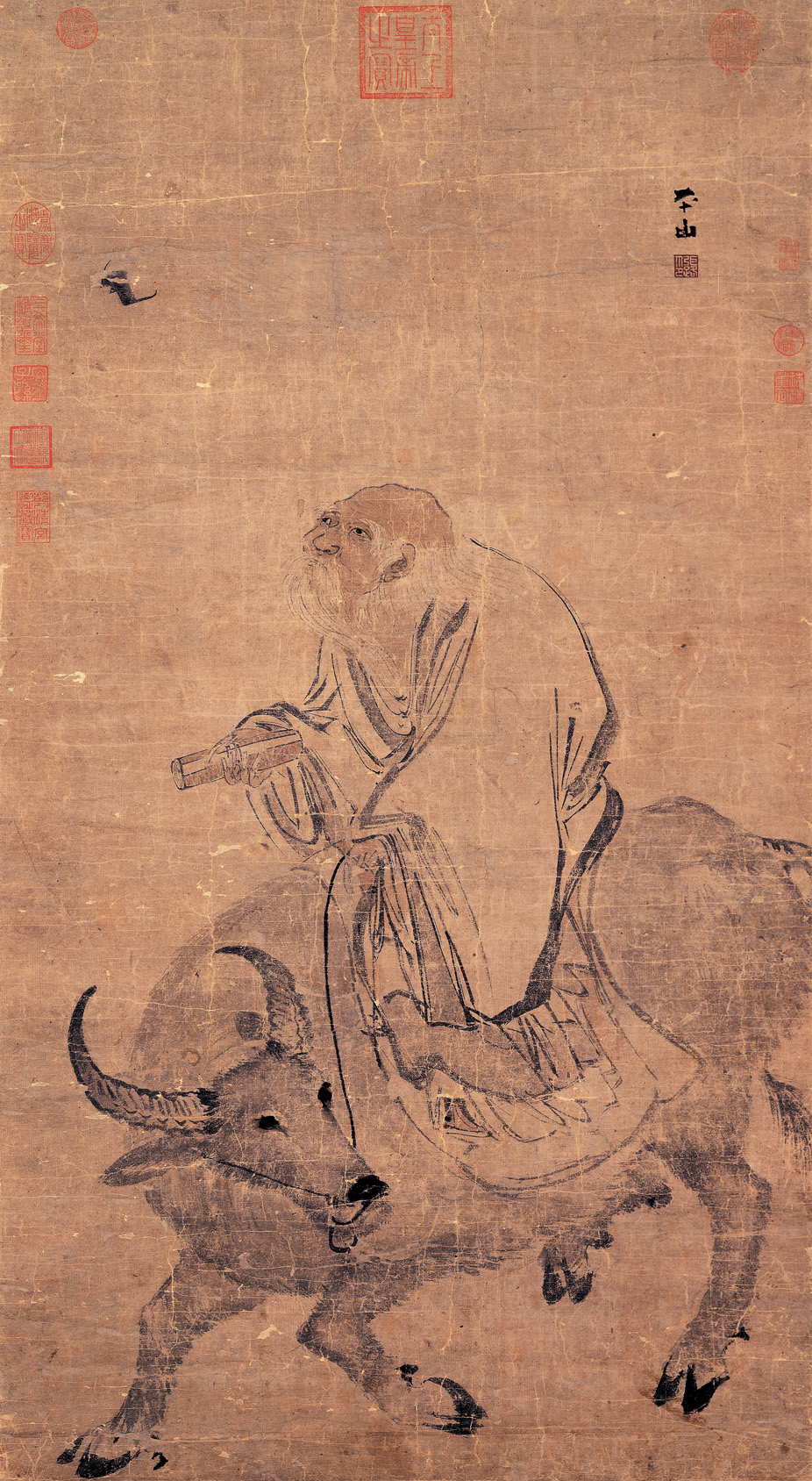
This line is attributed to Lao Tzu, the figure credited with the Tao Te Ching in China around the sixth century BCE; it is one translator’s rendering of a passage about not competing, and other translations of the same lines read quite differently.
The conversation plan
Take this into a classroom.
Claim
Anger clouds your judgment, so the calm person handles conflict better.
Counterclaim
Anger gives you energy and tells you something is wrong, and calm can look like not caring.
Essential question
What does anger give you in a conflict, and what does it take away?
The rest of the plan
Prompts, handout, teacher guide.
4 storytelling prompts go with this conversation, along with the printable student handout and teacher guide. Those are part of the Teach Different community, together with the full library of plans and the monthly live trainings where teachers work through them.
Transcript
Read the full transcript
Steve Fouts 00:03
Hey everybody Steve and Dan Fouts here. We are teaching different with Chinese philosopher Lao Tzu with a quote about anger. Here’s the quote. “The best fighter is never angry.” Anger is something kids deal with on a daily basis. Kids can be cruel. There are different friendship groups and cliques, and maybe issues going on at home, or on the way home from school. There are all kinds of places where they’re getting angry and being challenged to control their emotions.
Dan Fouts 00:47
Right. This is something that impacts kids of all ages, but it manifests itself differently. Younger kids might become angry, and not really understand the emotion, or be able to control themselves. As they get older the anger might be expressed differently. They might be better at controlling it, but then it’s sublimated into different things, like revenge.
Steve Fouts 01:23
Many of them don’t have self-awareness. That’s what’s lacking. What would you say Lao Tzu is saying with this quote? “The best fighter is never angry.”
Dan Fouts: 01:33 – Claim
I really like this quote because it’s twisting my understanding of what it means to be a fighter. When you fight for something you want to be successful at it. You’re striving after something. He’s saying that when you’re fighting and striving for something you should never be angry, to always remain calm no matter what. I always thought that you’re angry when you’re fighting. I don’t think of fighting and calm in the same sentence, which is essentially what he’s saying.
Steve Fouts 02:14
He’s implying that in order to have success, to win, the best fighter is never angry. Now, what’s a good push back against this claim?
Dan Fouts: 02:28 – Counterclaim
The best fighter uses anger to his or her benefit. Anger can be a good thing. Anger can give you what you want. From a teacher’s perspective, when a student misbehaves in class and makes me as a teacher angry, I have a couple of options. I can remain very calm and stare at the student, which sometimes works really well to communicate my displeasure over what the students doing. But, it can also work if you speak very…
Steve Fouts 03:19
Make a display.
Dan Fouts 03:22
Yeah, a little bit of a display. A quick, but very powerful, statement against them in front of class.
Steve Fouts 03:28
Right.
Dan Fouts 02:14
Without intimidating anyone.
Steve Fouts 03:29
Right.
Dan Fouts 03:30
Without embarrassing or humiliating anyone.
Steve Fouts 03:34
Why is that effective? Because, it actually prevents bigger problems from occurring later when other students might want to take advantage of some of the classroom rules, or the teacher’s personality. If you show a little bit of anger, it can pacify and prevent…
Dan Fouts 03:59
It can create calm.
Steve Fouts 04:00
Yes, it can create calm, and it can create a productive learning environment. Some students love walking into the classes with that teacher who just doesn’t play. You learn in those classes.
Dan Fouts 04:20
Right.
Steve Fouts 04:21
And, sometimes you have to use anger to establish that environment.
Dan Fouts 04:26
It’s funny, during my student teaching experience long ago, I remember at the end of it I asked the students how I did, what I could improve on. I’ll never forget, there was a student in class named Vinny who constantly disrupted class. I had a handful of students in my evaluation say, point blank, I wish you would have gotten tough with Vinny and called him out in class, because he disrupted the learning process. That’s a time where anger would have been a benefit. Steve, what kind of things could you bring to the conversation from a student perspective?
Steve Fouts 05:10
You have to throw in the idea of bullying and being intimidated at school. Unfortunately, students who intimidate other students might perceive a student who doesn’t get angry as someone who’s weak, as someone who’s ready to be taken advantage of. My experience teaching is from the west side of Chicago where some of the students come from underserved neighborhoods in very difficult social environments. They have to grow up with street smarts. They have to be able to protect themselves from harm. I’ve heard many of them share that the students they leave alone, and who get protected at school, are the students that have shown they can have an outburst and be angry…
Dan Fouts 06:20
They can stand up for themselves.
Steve Fouts 06:21
They can stand up for themselves. If you don’t stand up for yourself, then you’re going to have a problem every day. But, the moment you stand up for yourself and you show people where you can go, they’ll move past you to go to the next weak person.
Dan Fouts 06:38
So, that’s the way to deal with that bully in other words.
Steve Fouts 06:40
Right.
Dan Fouts 06:41
So, I’m just thinking of this playing out in the classroom. You might want to ask students when someone has done something bad to you, or made you really angry, did you remain calm? How did it work out? Do you regret it? Here’s where self-awareness comes in. They will have a greater understanding and awareness of their actions and behaviors and whether or not it worked out.
Steve Fouts 07:13
In different contexts.
Dan Fouts 07:14
Right
Steve Fouts 07:05
Anger comes out in all kinds of different ways toward people. Raising their awareness for when they get angry next time. What are they going to start thinking about? Should I get angry or should I remain calm? What’s my goal?
Dan Fouts 07:31
Exactly.
Steve Fouts 07:32
I’m a fighter, right? What am I fighting for? What’s the goal at the end of the rainbow?
Dan Fouts 07:39
This is impulse control. You have to have an idea of what your goal is before you can decide whether or not anger or being calm is the best route to take to satisfy that goal. Adults need this.
Steve Fouts 07:55
Yes, no question.
Dan Fouts 07:56
Even more so than the students.
Steve Fouts: 07:57 – Essential Question
No question. This should be a really good conversation. Here is an essential question you can use to wrap this conversation up, Is anger always self-destructive? You can give them an opportunity then to go through different scenarios in different situations where they would answer a question like that differently.
Dan Fouts 08:30
Now in terms of curriculum connections with this essential question, is anger always self-destructive, my mind immediately goes to nonviolent civil disobedience, if that’s taught in your curriculum. This is a wonderful question to pose as you’re studying that method of getting what you want and being successful with something.
Steve Fouts 09:00
I think that there are a lot of novels that have characters in them that have flaws of anger and they’re not able to control themselves. That would be another application as well. So, that’s teaching different with Lao Tzu with an interesting quote and conversation about anger. Make sure you visit our Conversation Library where we have many conversations like this, each with a different quote, a sample claim, counterclaim, and an essential question to get you started.
We will see you soon.
Steve Fouts 09:35
Alright, take care everybody.