
“Love is the only force capable of transforming an enemy into a friend.”
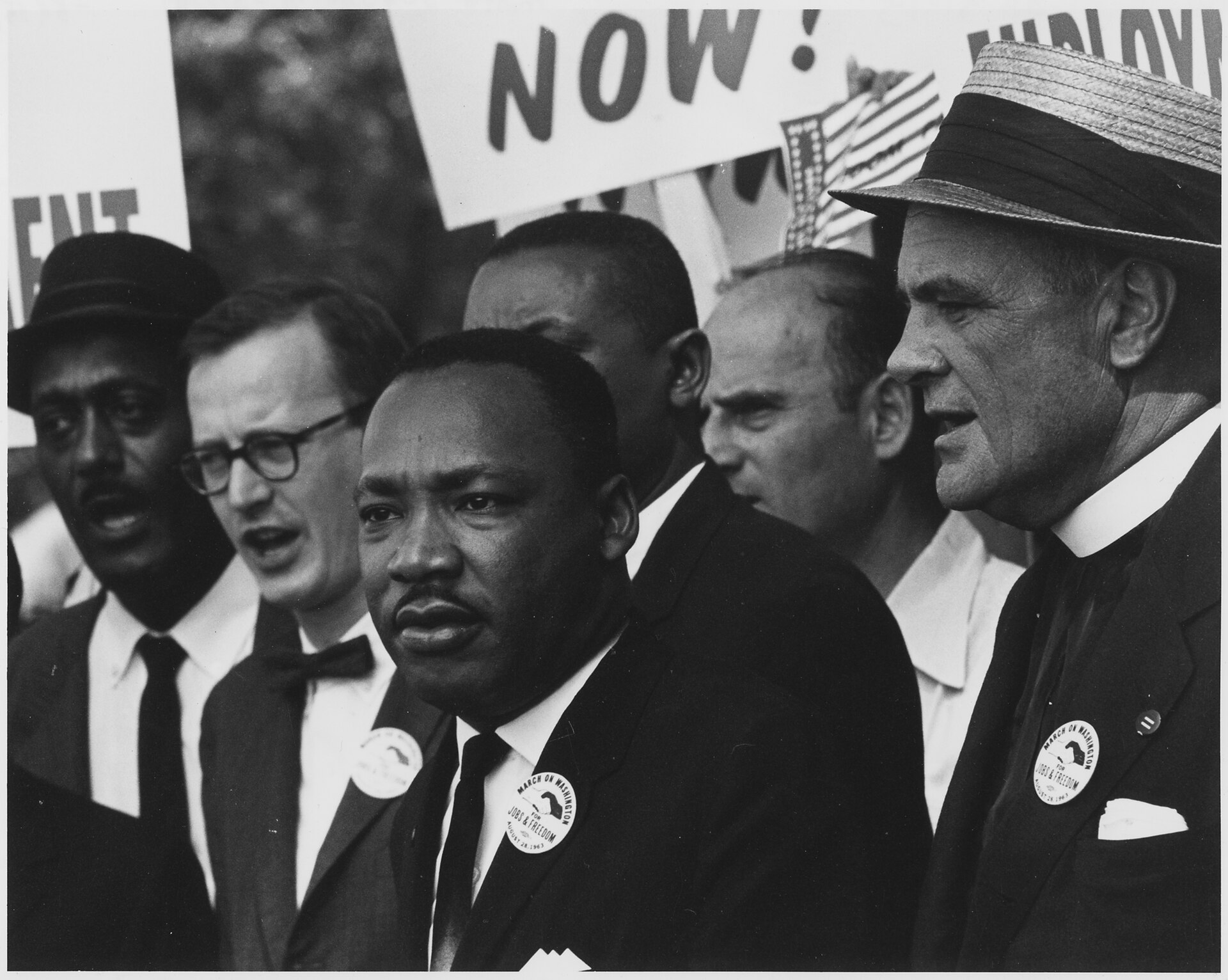
Dr. Martin Luther King Jr. 1929 to 1968
Also on Apple Podcasts, Spotify and YouTube.
Martin Luther King Jr (1929 to 1968) put this in Strength to Love, a book of sermons written partly from a jail cell, addressed to people being asked to love those who were beating them.
The conversation plan
Take this into a classroom.
Claim
Love is the only thing that turns an opponent into something other than an opponent.
Counterclaim
Some conflicts do not end in understanding, and love without practical action leaves the harm exactly where it was.
Essential question
Can love resolve every conflict?
The rest of the plan
Prompts, handout, teacher guide.
4 storytelling prompts go with this conversation, along with the printable student handout and teacher guide. Those are part of the Teach Different community, together with the full library of plans and the monthly live trainings where teachers work through them.
Transcript
Read the full transcript
Steve Fouts 00:06
Hey everybody, Steve and Dan Fouts here. We’re teaching different with Dr. Martin Luther King, Jr., American civil rights leaders. Here’s the quote, “Love is the only force capable of transforming an enemy into a friend.” This quote is dealing with conflict, and whether conflict is something that you want or don’t want in your life. Students are in the midst of figuring this out on their own. They experience conflict daily growing up and going to school. There may be conflict on the way to school, or with their families and friends…
Dan Fouts 00:54
…and teachers.
Steve Fouts 00:55
…teachers and principals. Students are always confronted with choices. How do you approach an enemy, an opponent, or someone you disagree with? Do you kill them with kindness, or do you take them on? These are questions that each student will likely have different answers to. But, conflict is definitely something that every student is going to be able to relate to. What claim do you think Dr. Martin Luther King, Jr. is making with this quote?
Dan Fouts: 1:27 – Claim
This is one of my favorite ones from Dr. King. I think he’s coming down on the side of treating people with kindness or love. If you have an enemy who you want to convert into a friend or at least someone you can tolerate, then the way to approach it is through love. If there’s conflict you try to erase the conflict by treating them in a very delicate, loving way.
Steve Fouts 1:57
Love is proactive. Dr. King actually called it a weapon.
Dan Fouts 2:03
Right.
Steve Fouts: 2:04 – Counterclaim
It’s not something that is just this touchy-feely thing, love is a decision you make. It’s a commitment you make to an ideal way that you want to be, and that’s the way you transform an enemy into a friend. You convince someone that you care for them more than they may even care for themselves. It’s a powerful concept
Let’s push against this quote to come up with a counterclaim and see if we can challenge what Dr. King is saying. The first thing that comes to mind for me is this idea of respect and belief. Many of the students I worked with on the west side of Chicago came from underserved neighborhoods where conflict was just a way of life. It’s something they’re challenged with and try to stay above. When you talk about having a friend in an environment like that, it’s a bit different than having friends in other places. Students would tell me about how in order to have a friend you almost have to be their opponent first. They have to first be someone you didn’t like and had a conflict with, before they can become your friend. They don’t become friends because they love them, but because they respect them.
Dan Fouts 3:30
Right.
Steve Fouts 3:31
And, they respect you. The conflict was actually important to the friendship. Dan Fouts: 3:37
Some of the students, when they write this as a counterclaim, might say respect is the only force capable of transforming an enemy into a friend.
Steve Fouts 3:46
Love and respect are close, but they’re different.
Dan Fouts 3:50
They’re different
Steve Fouts 3:52
I think respect would be really good for a counterclaim. Here’s a question you can ask to keep the conversation going, have you ever stood up to somebody and got respect that ended up creating a friendship just by showing them that you weren’t afraid of conflict?
Dan Fouts 4:13
Showing strength.
Steve Fouts 4:14
Showing strength. You actually made a friend because they were impressed with your ability to be an opponent.
Dan Fouts 4:22
There should be some interesting stories.
Steve Fouts 4:26
Oh, yeah.
Dan Fouts 4:27
The other thing about this conversation that just popped in my mind is when you have kids share stories about how they manage conflict, I think as teachers we’re going to learn a lot about how they behave in our class…
Steve Fouts 4:43
Definitely.
Dan Fouts 4:44
…and how they behave with other students. Some kids are disrespectful in class, and teachers want to know where that comes from. I bet you’ll get a lot of insight from this conversation into how to deal with your own students moving forward.
Steve Fouts: 5:00 – Essential Question
So, here’s an essential question you can use to wrap up the conversation. What’s the best way to convert an enemy to a friend?
Dan Fouts 5:13
As far as our curriculum connections, an irresistible choice is Abraham Lincoln and his second inaugural speech just as the civil war was ending. It’s a great speech because it talks about what the attitude is going to be to the south after the civil war. Lincoln had to answer this essential question. Wouldn’t it be interesting if you have this conversation, pose this essential question, then introduce Lincoln’s second inaugural? You can ask the kids, how does Lincoln answer this question? Is this the right answer to take? It would help the kids think about their own responses to that essential question and compare them to what Lincoln did. This shows how historical figures and students have the same types of dilemmas.
Steve Fouts 6:17
Right, because showing love toward an enemy is not easy. We hope you enjoyed our conversation with Dr. Martin Luther King, Jr.. Make sure you visit our Conversation Library where we have many conversations like this, each with a different quote, a sample claim, counterclaim, and an essential question to get you started.
Take care everybody.
Dan Fouts 6:43
Alright, take care.